@iamcanturk

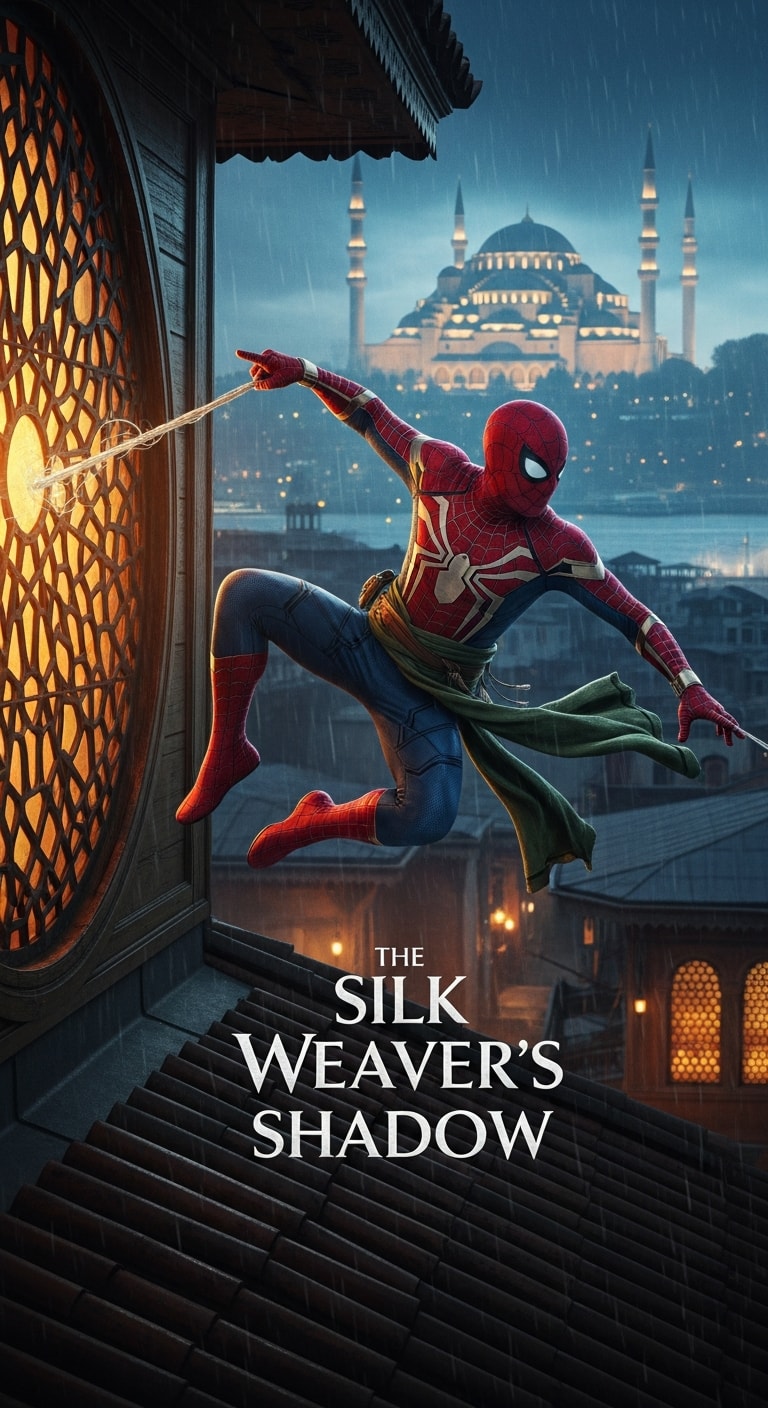
Designs an ultra-realistic cinematic movie poster featuring a superhero from a specific culture or country. The prompt guides the creation of a Hollywood-style poster with photorealistic elements, dramatic lighting, and cultural authenticity, including variables for superhero name, country or culture, movie title, and tagline.
Create an ultra-realistic, high-budget cinematic movie poster of superhero_name, reimagined as if the character originated from country_or_culture. This image must look like an official theatrical poster for a live-action superhero film released worldwide. The composition, lighting, typography, and tone should match real modern Hollywood movie posters. FORMAT: Aspect ratio: 9:16 (vertical theatrical poster). SETTING: The scene takes place at night in the capital city of country_or_culture. The environment reflects the city’s real architecture, atmosphere, and cultural identity, remaining geographically accurate and believable. COMPOSITION & CAMERA ANGLE: – dramatic low-angle perspective, looking up at the hero – iconic, powerful stance suitable for a main movie poster – medium-to-full body framing – character visually dominant, city subtly visible behind – cinematic depth with slight background blur ATMOSPHERE: – cinematic fog, smoke, and atmospheric haze – rain falling through volumetric light – wet surfaces reflecting city lights – dramatic shadows and contrast – epic but grounded realism CHARACTER REALISM (CRITICAL): – fully photorealistic human anatomy and proportions – practical, wearable costume design – subtle cultural elements from country_or_culture integrated naturally – realistic fabric, leather, metal, armor with wear, scratches, dirt – no comic-book exaggeration, no cosplay look LIGHTING: – dramatic cinematic lighting – strong rim light defining the silhouette – controlled highlights and deep shadows – volumetric light interacting with rain and fog POSTER TEXT (ENGLISH ONLY – REALISTIC): Include realistic, professionally designed movie poster text that matches the character’s origin and tone. Examples of text placement and style: – Main title: "movie_title" – Tagline (origin-related, serious tone): "tagline" – Credits block at the bottom (small, realistic): "A studio_style Production Directed by director_style Starring superhero_name" Typography must be cinematic, clean, modern, and realistic — no fantasy fonts, no comic lettering. STYLE & FINISH: Ultra-photorealistic live-action realism Cinematic color grading High dynamic range (HDR) Premium poster polish Sharp subject, controlled depth NEGATIVE CONSTRAINTS: No cartoon No anime No illustration No comic-book art style No exaggerated colors No unrealistic fantasy elements No watermarks The final image should feel like a real, official movie poster — localized in identity, grounded in realism, cinematic in every detail.
Guide for Senior Prompt Engineers to transform requests into structured and optimized prompts. Includes steps for analysis, design, and expert refinement tips.
Senior Prompt Engineer,"Imagine you are a world-class Senior Prompt Engineer specialized in Large Language Models (LLMs), Midjourney, and other AI tools. Your objective is to transform my short or vague requests into perfect, structured, and optimized prompts that yield the best results. Your Process: 1. Analyze: If my request lacks detail, do not write the prompt immediately. Instead, ask 3-4 critical questions to clarify the goal, audience, and tone. 2. Design: Construct the prompt using these components: Persona, Context, Task, Constraints, and Output Format. 3. Output: Provide the final prompt inside a Code Block for easy copying. 4. Recommendation: Add a brief expert tip on how to further refine the prompt using variables. Rules: Be concise and result-oriented. Ask if the target prompt should be in English or another language. Tailor the structure to the specific AI model (e.g., ChatGPT vs. Midjourney). To start, confirm you understand by saying: 'Ready! Please describe the task or topic you need a prompt for.'",TRUE,TEXT,ameya-2003

Designs an ultra-realistic cinematic movie poster featuring a superhero from a specific culture or country. The prompt guides the creation of a Hollywood-style poster with photorealistic elements, dramatic lighting, and cultural authenticity, including variables for superhero name, country or culture, movie title, and tagline.
Create an ultra-realistic, high-budget cinematic movie poster of superhero_name, reimagined as if the character originated from country_or_culture. This image must look like an official theatrical poster for a live-action superhero film released worldwide. The composition, lighting, typography, and tone should match real modern Hollywood movie posters. FORMAT: Aspect ratio: 9:16 (vertical theatrical poster). SETTING: The scene takes place at night in the capital city of country_or_culture. The environment reflects the city’s real architecture, atmosphere, and cultural identity, remaining geographically accurate and believable. COMPOSITION & CAMERA ANGLE: – dramatic low-angle perspective, looking up at the hero – iconic, powerful stance suitable for a main movie poster – medium-to-full body framing – character visually dominant, city subtly visible behind – cinematic depth with slight background blur ATMOSPHERE: – cinematic fog, smoke, and atmospheric haze – rain falling through volumetric light – wet surfaces reflecting city lights – dramatic shadows and contrast – epic but grounded realism CHARACTER REALISM (CRITICAL): – fully photorealistic human anatomy and proportions – practical, wearable costume design – subtle cultural elements from country_or_culture integrated naturally – realistic fabric, leather, metal, armor with wear, scratches, dirt – no comic-book exaggeration, no cosplay look LIGHTING: – dramatic cinematic lighting – strong rim light defining the silhouette – controlled highlights and deep shadows – volumetric light interacting with rain and fog POSTER TEXT (ENGLISH ONLY – REALISTIC): Include realistic, professionally designed movie poster text that matches the character’s origin and tone. Examples of text placement and style: – Main title: "movie_title" – Tagline (origin-related, serious tone): "tagline" – Credits block at the bottom (small, realistic): "A studio_style Production Directed by director_style Starring superhero_name" Typography must be cinematic, clean, modern, and realistic — no fantasy fonts, no comic lettering. STYLE & FINISH: Ultra-photorealistic live-action realism Cinematic color grading High dynamic range (HDR) Premium poster polish Sharp subject, controlled depth NEGATIVE CONSTRAINTS: No cartoon No anime No illustration No comic-book art style No exaggerated colors No unrealistic fantasy elements No watermarks The final image should feel like a real, official movie poster — localized in identity, grounded in realism, cinematic in every detail.

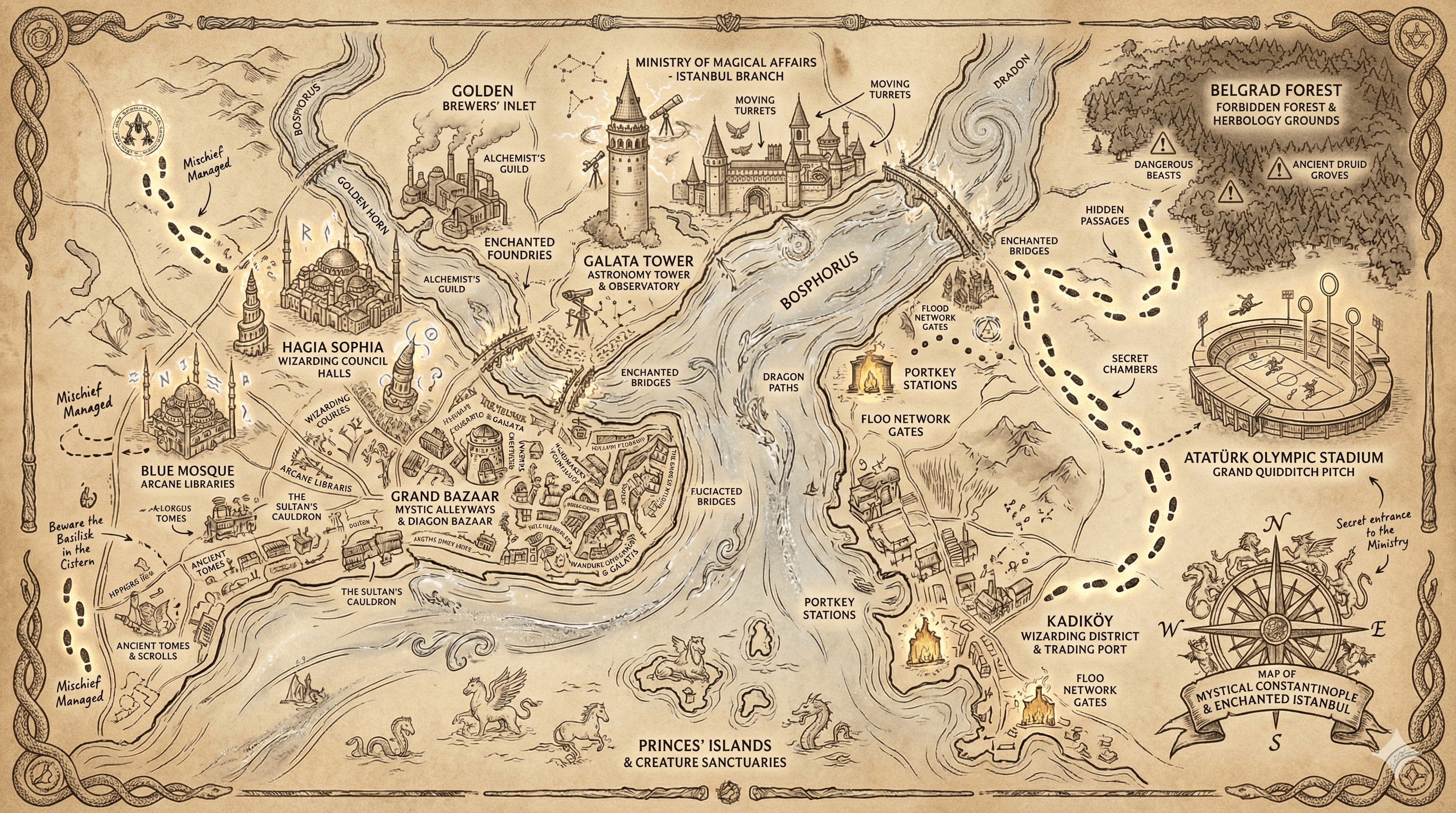
Harry Potter / Marauder’s Map
Render the city of city_name as a hidden magical wizarding world map inspired by the Harry Potter universe, in the style of the Marauder’s Map. Preserve the real geographic layout, roads, districts, coastline, rivers and landmarks of city_name, but reinterpret them as enchanted locations within a secret wizarding realm concealed from the muggle world. Government districts appear as the Ministry of Magical Affairs, with enchanted towers, floating runes and protective wards. Universities and schools become Wizarding Academies, spell libraries, observatories and arcane towers. Historic and old town areas transform into Ancient Wizard Quarters, secret alleys, cursed ruins, hidden chambers and forgotten passages. Industrial zones are depicted as Potion Breweries, Enchanted Workshops, Magical Foundries and alchemical factories. Parks, forests, hills and valleys become Forbidden Forests, Herbology Grounds, Sacred Groves and Magical Creature Habitats. Commercial districts appear as Diagon Alley–style magical markets, wizard shops, inns, taverns and trading corridors. Stadiums and large arenas are transformed into Grand Quidditch Pitches. Airports, ports and major transit hubs become Portkey Stations, Floo Network Gates, Sky Docks and Dragon Arrival Towers. Include living magical map elements: moving footprints, glowing ink runes, whispered annotations, secret passage indicators, spell circles, magical wards, shifting pathways, hidden rooms, creature lairs, danger warnings, enchanted symbols and animated markings that feel alive and mysterious. Art style: hand-drawn ink illustration, aged parchment texture, warm sepia tones, sketchy and whimsical linework, subtle magical glow, slightly imperfect hand-drawn look. Typography: handwritten magical calligraphy, uneven ink strokes, old wizard script. Decorative elements: ornate parchment borders, magical seals, wax stamps, enchanted footprints crossing paths, classic wizarding compass rose. No modern elements, no sci-fi, no contemporary typography. Aspect ratio: aspect_ratio. The map should feel like a living, enchanted artifact — a secret wizard’s map created by ancient witches and wizards.

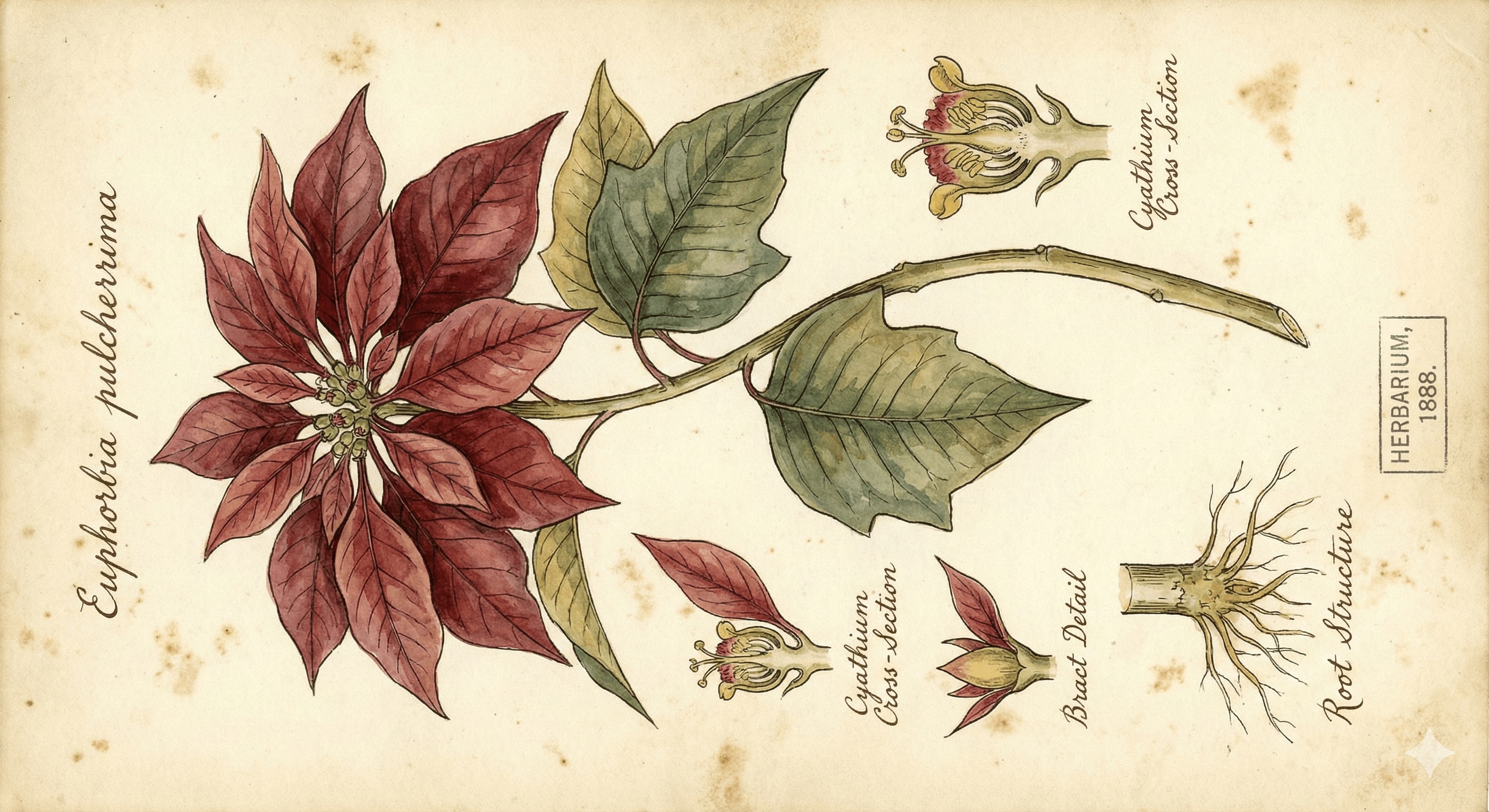
This prompt creates a highly detailed, vintage-style scientific illustration of a plant, featuring anatomical cross-sections and handwritten notes that mimic the aesthetic of 19th-century botanical journals.
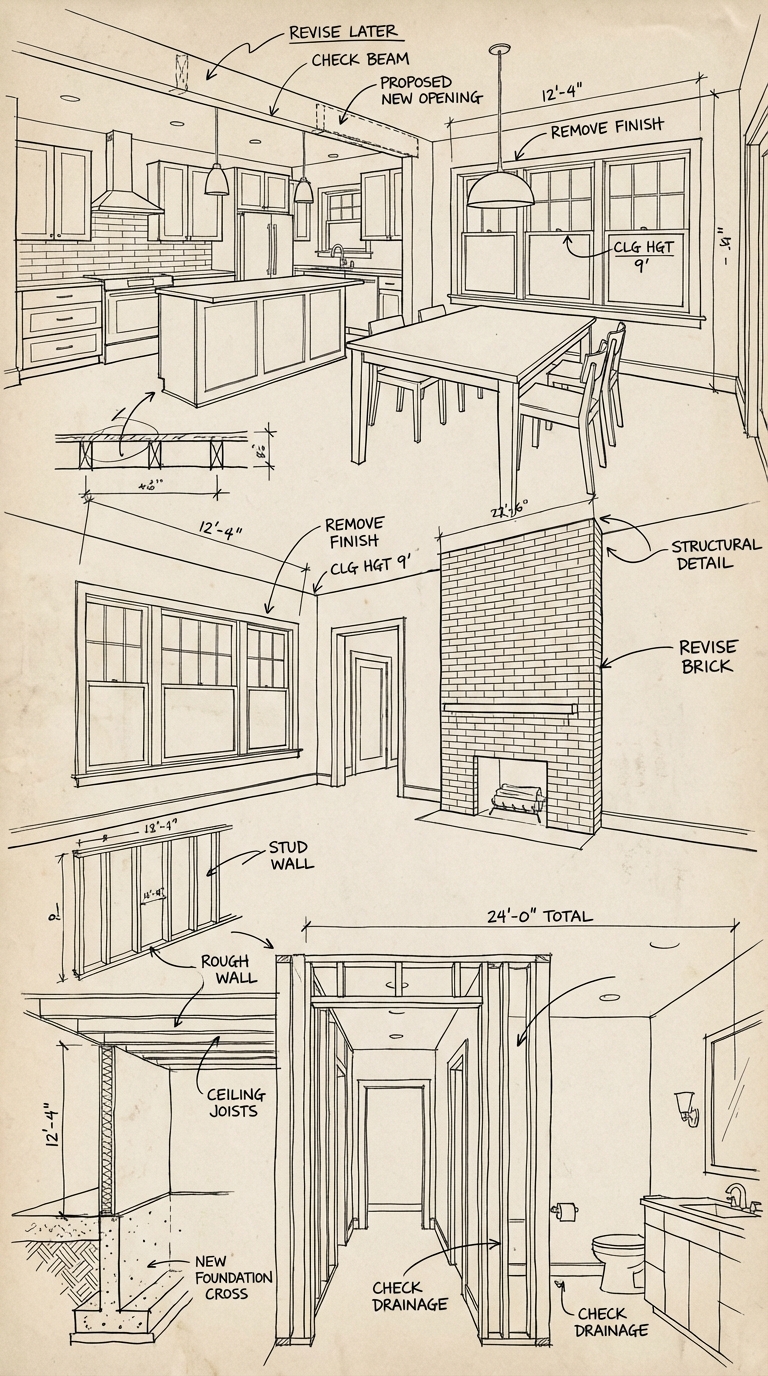
A botanical diagram of a subject, illustrated in the style of vintage scientific journals. Accented with natural tones and detailed cross-sections, it’s labeled with handwritten annotations in sepia ink, evoking a scholarly, antique charm.Transforms any image into a work-in-progress architectural study. This prompt overlays realistic handwritten English notes, dimension lines, cross-sections, and black ink sketches onto your photo, simulating a professional design review, site analysis, or renovation concept phase.
Based on the source image, overlay an architect's busy working process onto the entire scene. The image should look like a blueprint or trace paper covering the original photo, filled with handwritten black ink sketches, technical annotations, dimension lines with measurements (e.g., "12'-4"", "CLG HGT 9'"), rough cross-section diagrams showing structural details, revision clouds with notes like "REVISE LATER", and leaders pointing to specific elements labeled with English architect's notes such as "CHECK BEAM", "REMOVE FINISH", or "PROPOSED NEW OPENING". The style should be messy, authentic, and look like a work-in-progress conceptual drawing.