Tip for users: [THEME] = the overall vibe/story. [OBJECT LIST] = the specific doodles you want the AI to draw around the person. Example: Theme: Cyberpunk Tech Objects: circuit lines, holograms, data streams, glowing arrows, tech icons, lightning bolts.
Using the uploaded image as the base photo, do NOT change the person's face, body, or pose. Add hand-drawn white doodle illustrations around the subject, sketchy marker / chalk style, imperfect playful lines, doodles should appear drawn on top of the photo. Doodle theme: theme Include elements such as: object_list Keep the background intact, do not cover the face, editorial aesthetic poster style, clean composition, high quality.
“Create epic crossover artwork featuring characters from different animated universes interacting together in cinematic scenes. Focus on emotional storytelling, dynamic poses, dramatic lighting, colorful backgrounds, and a polished 2D cartoon style inspired by modern animated movies. Include expressive emotions, detailed environments, and a sense of adventure, friendship, and wonder.”
Create a cinematic crossover scene featuring character1 and character2 in fantasy world.

Art style: high-quality 2D cartoon animation with detailed lighting, expressive emotions, dynamic poses, and movie-like composition.

Scene mood: emotional and adventurous.

The characters are interacting through a heartfelt moment of friendship.

Include:
- dramatic lighting
- colorful background
- cinematic atmosphere
- detailed environment
- smooth animation style
- expressive faces
- depth and motion

Camera angle: wide cinematic shot

Visual inspiration: animated feature films, modern cartoon aesthetics, emotional storytelling, fantasy adventure.

Avoid:
- blurry details
- extra limbs
- distorted anatomy
- low quality
- cropped characters
Football Match
1. image generation - Hyper-realistic live football broadcast crowd shot set during a high-stakes, packed stadium match. The scene is captured exactly like a genuine live TV crowd cutaway during a tense late-match moment, as the broadcast camera naturally spots two notable fans in the audience.
Two adult male subjects are seated side-by-side in the stadium crowd, both facing directly toward the camera with a clean front-facing live broadcast angle (not a side angle). Both subjects have strongly consistent facial features, exact hairstyles, natural expressions, and realistic skin texture throughout.
Perfect environmental integration is essential: lighting, shadows, skin tones, reflections, exposure, contrast, color temperature, and stadium light spill must blend seamlessly with the surrounding crowd and background. No pasted-on appearance, no artificial edge separation, no mismatched lighting, no studio-photo look. Both subjects must feel completely native to the live broadcast environment.
Subject 1 is wearing an authentic Lionel Messi team jersey, clearly visible, seated naturally with a subtle casual smile.
Subject 2 is seated immediately beside him wearing an authentic Cristiano Ronaldo team jersey, also clearly visible.
Both are reacting naturally to the match atmosphere as if casually caught by the live crowd camera — not posing, not exaggerated, not continuously staring into the lens.
Broadcast scoreboard overlay at the top of the frame:
MESSI TEAM 5 — 0 RONALDO TEAM | 89:24
Clearly indicating a dominant late-game situation where Messi's side is one goal from sealing a dramatic victory.
Visual and technical qualities:

Realistic sports broadcast framing
Natural stadium floodlight illumination
Subtle handheld broadcast camera shake
Slight live zoom framing
LED stadium screen glow
Energetic crowd in background
Authentic broadcast sharpness and compression texture

Aspect ratio: 16:9 — single continuous front-camera frame, no cuts, no cinematic grading, no slow motion.


2. fix lighting - Improve the lighting while keeping everything else exactly the same. Do not change the person, pose, expression, background, or composition. Fix issues like back lighting, harsh shadows, underexposure or uneven lighting. Transform the original lighting into soft, natural, flattering light coming from slightly above eye level and facing the subject, so the face is evenly lit with realistic skin tones. Keep the result photorealistic and consistent with the original scene.

3. zoom out -

4. 🎬 MASTER PROMPT — Live Football Broadcast Crowd Reaction Video

📐 FORMAT & SHOT SPECS
Duration: 5 seconds | Ratio: 16:9 | Single continuous shot
Camera: Handheld broadcast zoom lens, slight organic shake
Style: Hyper-realistic live TV sports broadcast footage
Color Grade: Authentic sports broadcast — warm floodlight tones,
slight saturation boost, real TV compression artifacts

🎥 SHOT COMPOSITION
Front-facing crowd cutaway — both subjects centered,
side-by-side in stadium seats, full upper body visible,
both faces directly toward camera lens.
Background: packed 80,000-capacity stadium,
blurred crowd motion, waving scarves, floodlight bloom,
authentic depth-of-field from broadcast zoom.

👤 SUBJECT LEFT — MESSI FAN
Face: [INSERT REFERENCE FACE A — do not alter features]
Jersey: Pink Messi-inspired team football shirt
Seconds 0–1: Seated calm, watching match, relaxed expression
Seconds 1–5: GOAL REACTION —
  → Eyes widen instantly
  → Erupts into massive smile
  → Both arms shoot upward simultaneously
  → Slight rise from seat, body forward
  → Pure euphoric celebration energy
Lighting: Warm stadium floodlight hitting face naturally,
          realistic skin reflection, no artificial glow

👤 SUBJECT RIGHT — RONALDO FAN
Face: [INSERT REFERENCE FACE B — do not alter features]
Jersey: Yellow Ronaldo-inspired team football shirt
Seconds 0–1: Forward-focused, tense match engagement
Seconds 1–5: DEVASTATION REACTION —
  → Sudden stand from seat in disbelief
  → Face drops — shock, then anguish
  → Emotional near-tears expression
  → Mouth open, shouting in disappointment
  → Hands to head or face in despair
Lighting: Same continuous stadium light,
          shadow and highlight consistent with left subject

📺 BROADCAST OVERLAY GRAPHICS
TOP SCOREBOARD BAR:
[ MESSI TEAM  5 – 0  RONALDO TEAM ]  ⏱ 89:24

Corner watermark: beIN Sports / ESPN FC logo (subtle)
Bottom ticker: Live match stats scrolling
Broadcast timestamp burn: bottom-right corner
Slight scan-line texture, real TV compression noise

🔊 AUDIO LAYER
English commentator voice (BBC/ITV broadcast style):

0:00–1:00 → Tense ambient crowd murmur, commentator building tension
1:00 → "Messi... Messi... MESSI SCORES!
         Unbelievable! What a finish from the greatest
         to ever play this game!"
1:00+ → Crowd ERUPTS — roar fills stadium
         Continued commentary: "Five nil!
         It is absolutely over. Heartbreak
         for the other side!"
Background: Authentic stadium reverb,
            crowd chants, vuvuzelas distant

⚙️ CRITICAL TECHNICAL REQUIREMENTS
✅ Perfect face consistency — zero alteration to reference features
✅ Seamless background crowd blending — no green screen edges
✅ Matching stadium lighting + natural shadow continuity
✅ Real skin texture — pores, natural reflection, no AI smoothing
✅ Broadcast realism ONLY — no cinematic color grading
✅ Single continuous shot — NO cuts, NO angle changes
✅ NO slow motion — real-time broadcast speed only
✅ NO artificial animation loops — pure organic movement
✅ Handheld camera micro-shake throughout entire clip
✅ Natural motion blur on fast arm movements
Main Prompt -
Using the uploaded reference photo of my mom (or me with mom), design a cozy wall collage. Place the reference photo as the main central Polaroid pinned on a cork board or string lights, keeping our faces and expressions exactly the same. Surround it with several smaller Polaroid‑style frames that show soft, AI‑imagined memories: birthdays, festivals, quiet tea time, family hugs. Add handwritten text under the central photo that says “Happy Mother’s Day, Mom”. Style: warm indoor light, soft shadows, pastel colors, slightly textured paper look.

Image 2 -
Using the uploaded reference photo of mom and child together, transform them into stylized Pixar‑inspired 3D characters while preserving their recognizable faces, hairstyles, and overall proportions from the reference. Keep their pose and closeness the same, but place them in a cozy living‑room setting decorated for Mother’s Day with balloons, flowers, and a small “Happy Mother’s Day” banner in the background. Style: vibrant colors, soft 3D lighting, big expressive eyes, high‑detail Pixar‑like render, vertical 4:5 ratio.

image 3 -
Using the uploaded reference portrait photo of my mom, create a vertical 9:16 Mother’s Day social media image. Preserve her facial features and expression exactly. Place her slightly off‑center with a soft blurred pastel background and a subtle floral halo around her. Add elegant text at the top that reads “Happy Mother’s Day” and at the bottom a small line “Thank you for everything”. Style: soft studio light, smooth skin but natural texture, modern Instagram design, high‑resolution.

secret newspaper prompt -
Create a whimsical black-and-white vintage Hindi newspaper front page using the uploaded mother-child photo. Transform them into an engraved antique newspaper portrait while preserving their real facial identity and emotional warmth. Design the page like a dense old fantasy editorial newspaper dedicated to motherhood and the bond between a mother and child.

Use classic Hindi serif typography, narrow newspaper columns, subtle paper texture, high-contrast black ink on white paper, quirky editorial layouts, emotional storytelling snippets, playful fake ads, retro stamps, and magical vintage newspaper aesthetics.

The newspaper must automatically include:

Mother’s Name: [MOTHER_NAME]
Child’s Name: [CHILD_NAME]

Add creative Hindi Mother’s Day headlines, emotional one-liners, humorous side notes, and a short featured “news article” about how [CHILD_NAME] sees [MOTHER_NAME] as their superhero, safest place, and biggest source of love.

Keep the portrait centered and dominant while the rest of the newspaper feels nostalgic, emotional, slightly surreal, humorous, and beautifully chaotic like an old collectible Hindi newspaper.

Queen image -
USE THE UPLOADED PHOTO AS THE EXACT REFERENCE. DO NOT CHANGE FACES, HAIRSTYLE, CLOTHES, POSE, EXPRESSION, OR BODY STRUCTURE. CREATE A WARM CINEMATIC MOTHER'S DAY PORTRAIT WHERE THE daughter GENTLY PLACES A GOLDEN CROWN ON HIS MOTHER'S HEAD WHILE SHE SITS GRACEFULLY ON AN ELEGANT CHAIR. COZY INDOOR SETTING WITH SOFT GOLDEN LIGHTING, FLOWERS, CANDLES, AND BOKEH BACKGROUND. ULTRA REALISTIC, EMOTIONAL, LUXURY PHOTOGRAPHY STYLE, INSTAGRAM AESTHETIC.ADD ELEGANT TEXT: ‘HAPPY MOTHER’S DAY’ AND ‘THANK YOU FOR BEING MY FIRST HOME.’ 4:5 RATIO.
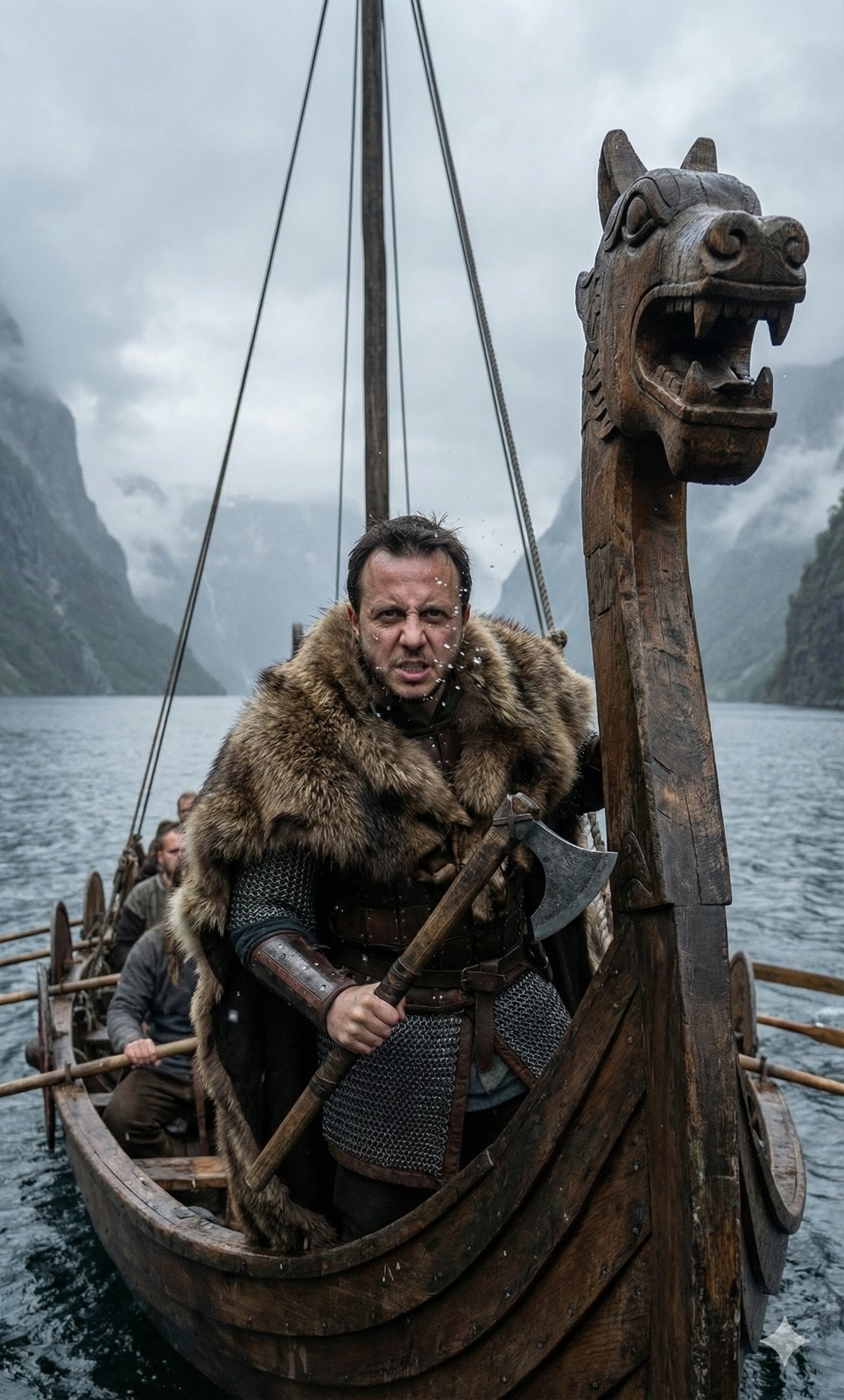
1{2 "prompt": "You will perform an image edit using the person from the provided photo as the main subject. The face must remain clear and unaltered. Transform the subject into a formidable **Viking Jarl or Shieldmaiden**, standing commanding at the prow of a longship sailing through a dramatic Norwegian fjord. Emphasize rugged textures of fur and metal, cold Northern light, sea spray, and an epic, adventurous atmosphere.",3 "details": {...+14 more lines
Nano banana 2 3d avatar prompt
Use a user-uploaded image as the source and convert the person into a stylized 3D character while preserving identity, facial structure, pose, hairstyle, clothing, and overall composition exactly as shown in the photo. The result should clearly resemble the real person.

The visual style is a stylized 3D character with a soft minimal cartoon 3D aesthetic, inspired by Pixar-like visuals but more minimal, toy-figure renders, and clean product-style character design. The balance should favor stylization over realism without changing the person’s real-world appearance.

Skin should appear as smooth matte plastic with a soft, uniform texture and gentle subsurface scattering. Facial features should remain faithful to the original image while being simplified in form. The expression should stay neutral and natural to the source photo.

Lighting should be clean and controlled, similar to a studio softbox setup, with very soft shadows, low contrast, and subtle highlights. The background should be a solid [BACKGROUND COLOR] with no gradient.

The camera should feel front-facing with a medium close-up framing, similar to a 50mm lens, with no distortion. Output quality should be high resolution with clean edges, no noise, strong style consistency, and a clearly non-photorealistic finish
Transform the provided clothing product image into a luxury studio ghost-mannequin presentation where the garment appears naturally worn and volumetric, as if inflated with air on an invisible mannequin. Preserve the exact identity of the original product with zero alterations
1{2 "model": "nano-banana",3 "task": "image_to_image_product_transformation",...+68 more lines
Professional prompt for generating academic paper figures using Nano Banana Pro (Gemini 3 Pro Image). Optimized for scientific publications and research papers.
Create a professional academic figure for scientific publication using the following guidelines:

Type of figure (architecture diagram, flowchart, data visualization, conceptual model, experimental setup)
Specific subject or topic
Visual style preference (minimal, detailed, technical, conceptual)

Guidelines:
- Use clean, professional design suitable for academic journals
- Ensure high contrast and readability
- Include clear labels and legends when needed
- Use consistent color scheme (typically blues, grays, and accent colors)
- Maintain scientific accuracy
- Optimize for the specified resolution (2K)
- Consider the target publication format

Generate a 16:9 aspect ratio image that effectively communicates the subject concept to an academic audience.
Transform the input product image into a professional commercial studio photograph while preserving the exact product identity, geometry, proportions, stitching, texture, and material properties.
1{2 "model": "nano-banana",3 "task": "image_to_image_product_enhancement",...+150 more lines
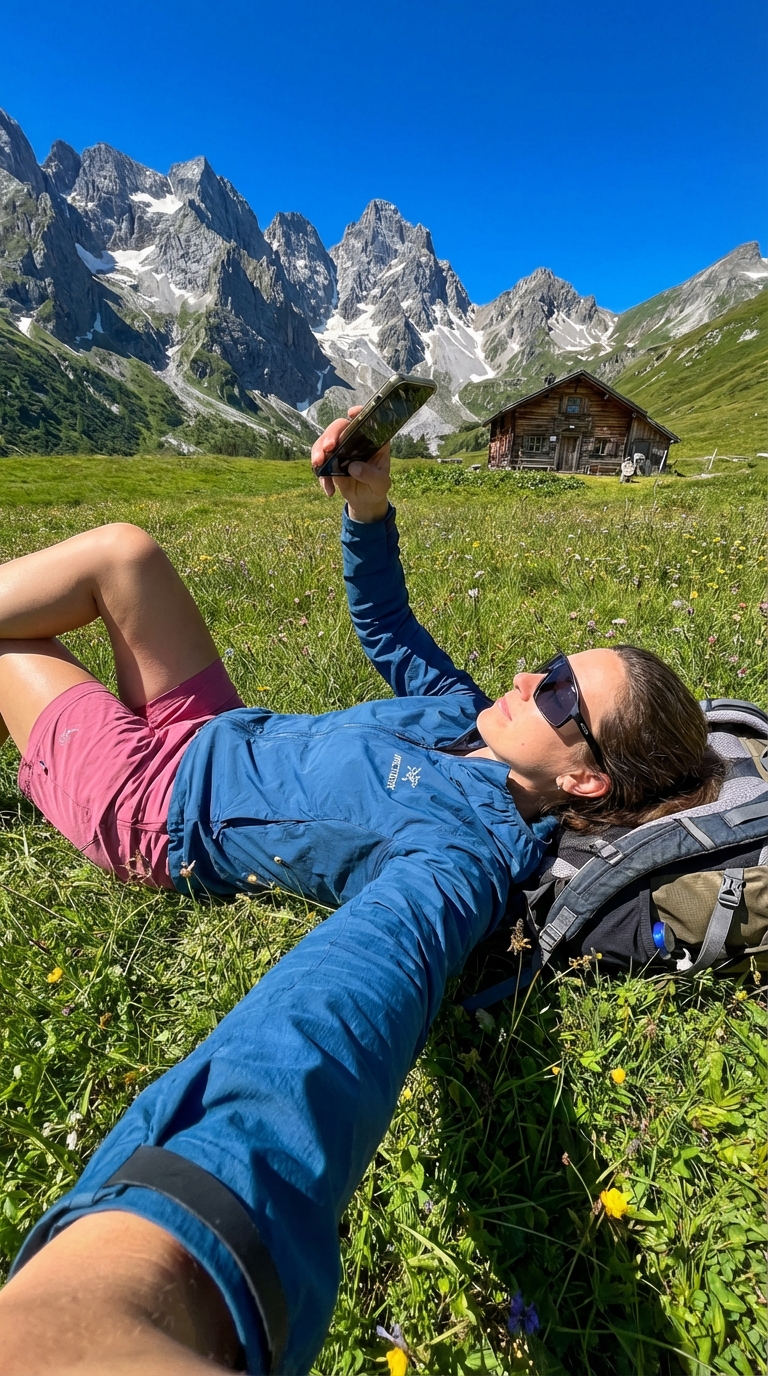
This prompt generates a photorealistic iPhone selfie-style image set in the alpine mountains. It captures a bright, clear daylight scene with dramatic mountain peaks and a lush green meadow. The subject is a woman in casual hiking attire, lying in the grass and using a backpack as a pillow, with a classic handheld selfie perspective. Ideal for creating detailed, realistic outdoor scenes.
Photorealistic iPhone selfie-style shot in alpine mountains. Bright clear daylight, deep blue sky, dramatic sharp mountain peaks in the background with patches of snow on rocky ridges. Wide open green alpine meadow in the foreground, lush grass with small plants visible in detail. A small wooden mountain hut in the mid-distance. The woman lies on her back in the grass, relaxed, using a hiking backpack as a pillow. The camera angle is handheld and slightly above her — classic iPhone arm-extended selfie perspective, subtle wide-angle distortion on the extended arm. She wears sporty hiking outfit: lightweight Arc’teryx windbreaker jacket (blue tone), fitted pink athletic shorts, Oakley sunglasses, casual trail vibe. Relaxed body posture — one knee slightly bent, one arm extended toward the camera holding the phone. Backpack visible under her head, realistic hiking gear details.
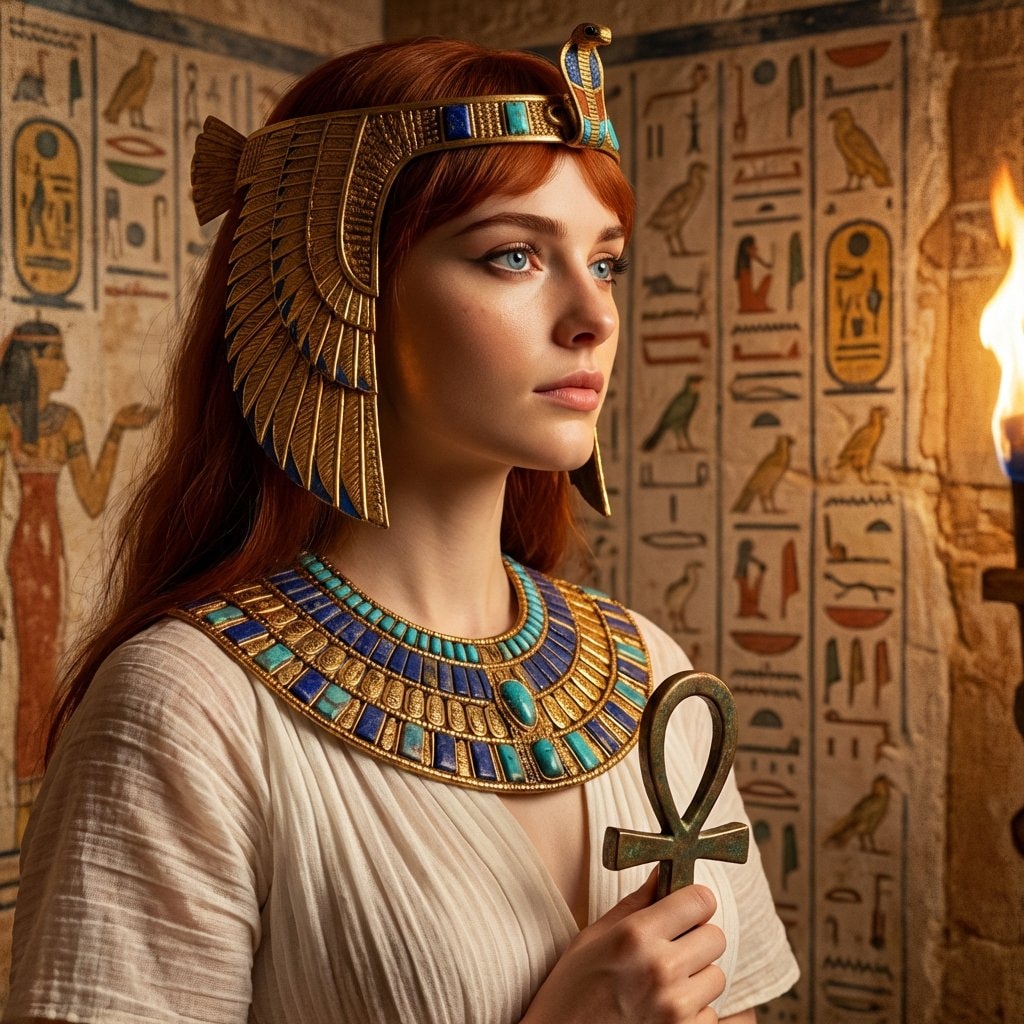
A stunning, stylized portrait of a woman transformed into an Ancient Egyptian priestess, blending photorealism with the texture of tomb paintings.
1{2 "title": "The Solar Priestess of Amun",3 "description": "A stunning, stylized portrait of a woman transformed into an Ancient Egyptian priestess, blending photorealism with the texture of tomb paintings.",...+59 more lines
Enhance and optimize an uploaded image by improving its clarity, quality, and visual appeal while maintaining its original design elements. The enhanced image will be suitable for professional and digital presentations.
Enhance the provided uploaded image by improving its clarity, quality, and overall visual impact while preserving its core design elements. Ensure that the completed image is suitable for display in professional and digital contexts.
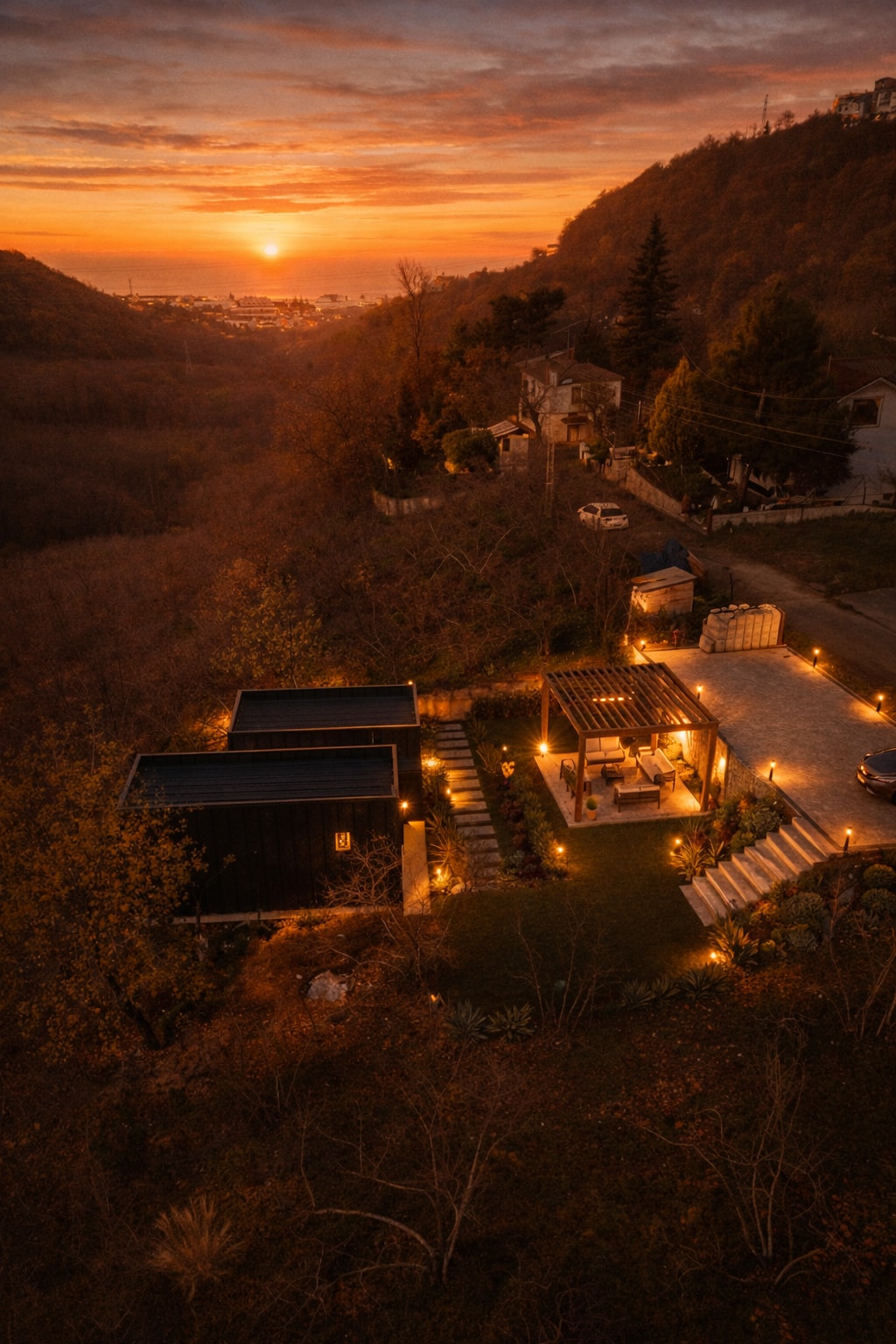
Applies the correct lighting and sunset effect to the image you will add. Gemini is recommended.
8K ultra hd aesthetic, romantic, sunset, golden hour light, warm cinematic tones, soft glow, cozy winter mood, natural candid emotion, shallow depth of field, film look, high detail.
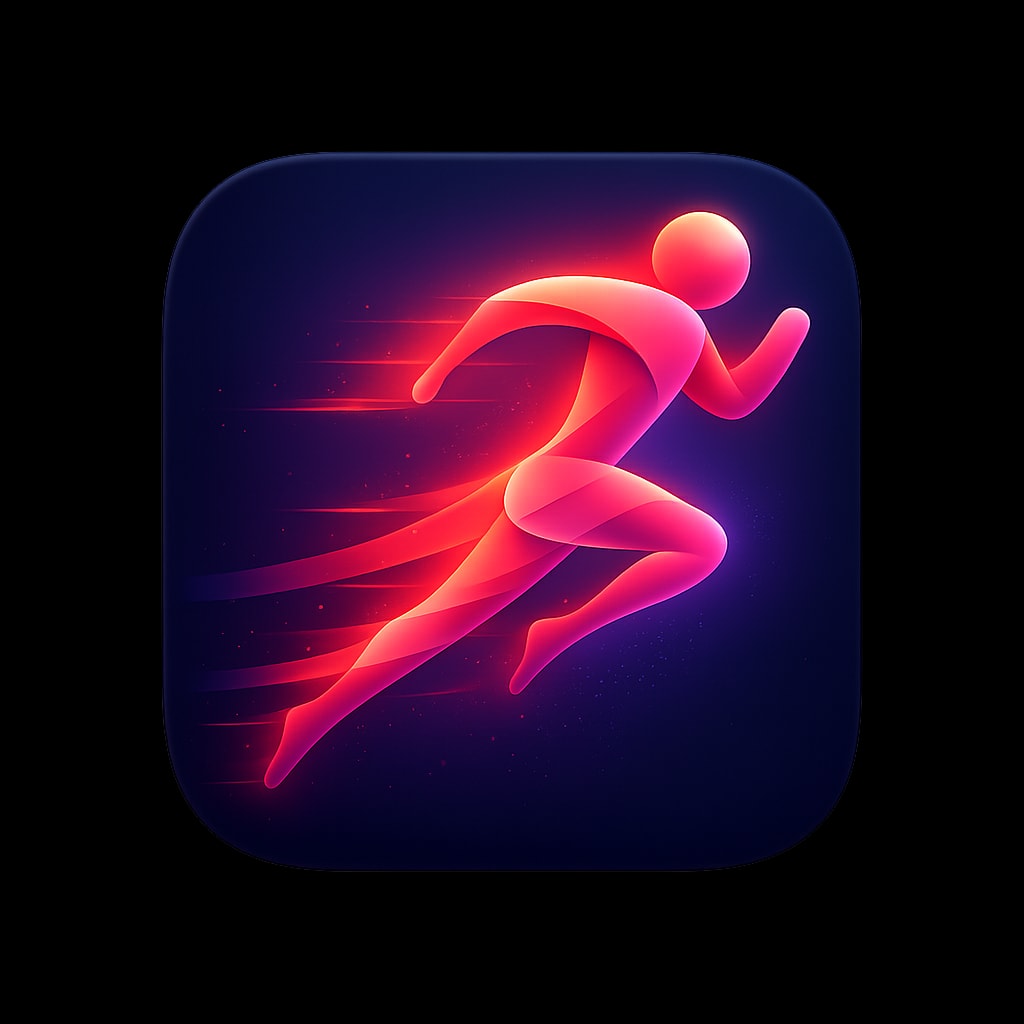
High quality icons for your apps.
A premium iOS app icon for a running and fitness app, featuring
a stylized abstract runner figure in motion, composed of flowing
gradient ribbons in energetic coral transitioning to vibrant
magenta. The figure suggests speed and forward momentum with
trailing motion elements. Background is a deep navy blue with
subtle radial gradient lighter behind the figure. Dynamic,
energetic, aspirational. Soft lighting with subtle glow around
figure. Rounded square format, 1024x1024px.

follow the specs below and the example icon designs attached:

These specifications define the visual language of premium, modern app icons as seen in top-tier iOS/macOS applications. The goal is to produce icons that feel polished, memorable, and worthy of a flagship product.

---

## 1. Canvas & Shape

### Base Shape
- **Format:** Square with continuous rounded corners (iOS "squircle")
- **Corner Radius:** Approximately 22-24% of icon width (mimics Apple's superellipse)
- **Aspect Ratio:** 1:1
- **Recommended Resolution:** 1024×1024px (scales down cleanly)

### Safe Zone
- Keep primary elements within the center 80% of the canvas
- Allow subtle effects (glows, shadows) to approach edges but not clip

---

## 2. Background Treatments

### Solid Backgrounds
- **Dark/Black:** Pure black (#000000) to deep charcoal (#1C1C1E) — creates drama, makes elements pop
- **Vibrant Solids:** Saturated single-color fills (electric blue #007AFF, warm orange #FF9500)
- **Gradient Backgrounds:** Subtle top-to-bottom or radial gradients adding depth

### Gradient Types (when used)
| Type | Description | Example |
|------|-------------|---------|
| Linear | Soft transition, typically lighter at top | Blue sky gradient |
| Radial | Center glow effect, darker edges | Spotlight effect |
| Angular | Sweeping color transition | Iridescent surfaces |

### Texture (Subtle)
- Fine vertical/horizontal lines for metallic or fabric feel
- Noise grain at 1-3% opacity for organic warmth
- Avoid heavy textures that compete with the main symbol

---

## 3. Color Palette

### Primary Palette Characteristics
- **High Saturation:** Colors are vivid but not neon
- **Rich Darks:** Blacks and navy blues feature prominently
- **Selective Brights:** Accent colors used sparingly for impact

### Recommended Color Families

#### Cool Spectrum
```
Navy/Deep Blue:    #0A1628, #1A2744, #2D4A7C
Electric Blue:     #007AFF, #5AC8FA, #64D2FF
Purple/Violet:     #5E5CE6, #BF5AF2, #AF52DE
Teal/Cyan:         #30D5C8, #5AC8FA, #32ADE6
```

#### Warm Spectrum
```
Orange:            #FF9500, #FF6B35, #FF3B30
Pink/Coral:        #FF6B8A, #FF2D55, #FF375F
Peach/Salmon:      #FFACA8, #FF8A80, #FFB199
```

#### Neutrals
```
True Black:        #000000
Soft Black:        #1C1C1E, #2C2C2E
White:             #FFFFFF
Off-White:         #F5F5F7, #E5E5EA
```

### Color Harmony Rules
- Limit to 2-3 dominant colors per icon
- Use complementary or analogous relationships
- One color should dominate (60%), secondary (30%), accent (10%)

---

## 4. Lighting & Depth

### Light Source
- **Position:** Top-left or directly above (consistent 45° angle)
- **Quality:** Soft, diffused — no harsh shadows
- **Creates:** Subtle highlights on upper surfaces, shadows below

### Depth Techniques

#### Highlights
- Soft white/light gradient on top edges of 3D forms
- Specular reflections as small, bright spots (not overpowering)
- Rim lighting on edges facing the light

#### Shadows
- **Drop Shadows:** Soft, diffused, 10-20% opacity, slight Y offset
- **Inner Shadows:** Very subtle, adds recessed effect
- **Contact Shadows:** Darker, tighter shadows directly beneath objects

#### Layering
- Elements should appear to float above the background
- Use atmospheric perspective (distant elements slightly hazier)
- Overlapping shapes create natural hierarchy

---

## 5. Symbol & Iconography

### Style Approaches

#### A. Dimensional/3D Objects
- Soft, rounded forms with clear volume
- Subtle gradients suggesting curvature
- Examples: Paper airplane, open book, spheres

#### B. Flat with Depth Cues
- Simplified shapes with strategic shadows/highlights
- Clean geometry with slight gradients
- Examples: Flame icon, compass dial

#### C. Abstract/Geometric
- Overlapping translucent shapes
- Interlocking forms creating visual interest
- Examples: Overlapping diamonds, triangular compositions

#### D. Glassmorphic/Translucent
- Frosted glass effect with blur
- Shapes that appear to have transparency
- Subtle refraction and color bleeding

### Symbol Characteristics
- **Simplicity:** Recognizable at 16×16px
- **Balance:** Visual weight centered or intentionally dynamic
- **Originality:** Avoid generic clip-art feeling
- **Metaphor:** Symbol clearly relates to app function

### Recommended Symbol Scale
- Primary symbol: 50-70% of icon canvas
- Leave breathing room around edges
- Optical centering (may differ from mathematical center)

---

## 6. Material & Surface Qualities

### Matte Surfaces
- Soft gradients without sharp highlights
- Subtle texture possible
- Colors appear solid and grounded

### Glossy/Reflective Surfaces
- Pronounced highlights and reflections
- Increased contrast between light and dark areas
- Suggests glass, plastic, or polished metal

### Metallic Surfaces
- Linear or radial gradients mimicking metal sheen
- Cool tones for silver/chrome, warm for gold/bronze
- Fine texture lines optional

### Glass/Translucent
- Reduced opacity (60-85%)
- Blur effect on elements behind
- Colored tint with light edges
- Subtle inner glow

### Paper/Fabric
- Soft, muted colors
- Very subtle texture
- Gentle shadows suggesting flexibility

---

## 7. Effects & Polish

### Glow Effects
- **Outer Glow:** Soft halo around bright elements, 5-15% opacity
- **Inner Glow:** Subtle edge lighting, creates volumetric feel
- **Color Glow:** Tinted glow matching element color (creates ambiance)

### Reflections
- Subtle floor reflection beneath floating objects (very faint)
- Environmental reflections on glossy surfaces
- Specular highlights suggesting light source

### Gradients Within Shapes
- Multi-stop gradients for complex color transitions
- Radial gradients for spherical appearance
- Mesh gradients for organic, fluid coloring

### Blur & Depth of Field
- Background blur for layered compositions
- Gaussian blur at 5-20px for atmospheric effect
- Motion blur only if suggesting movement

---

## 8. Composition Principles

### Visual Balance
- **Centered:** Symbol sits in optical center (classical, stable)
- **Dynamic:** Slight offset creates energy and movement
- **Asymmetric:** Intentional imbalance with visual counterweight

### Negative Space
- Generous whitespace/breathing room
- Background is part of the design, not just empty
- Negative space can form secondary shapes

### Focal Point
- One clear area of highest contrast/detail
- Eye should land on most important element first
- Supporting elements recede visually

### Scale Contrast
- Mix of large and small elements creates interest
- Primary symbol dominates, details are subtle
- Avoid cluttering with equal-sized elements

---

## 9. Style Variations

### Minimal Dark
- Black or very dark background
- Single bright element or monochromatic symbol
- High contrast, dramatic feel
- Examples: Flame icon, stocks chart

### Vibrant Gradient
- Multi-color gradient backgrounds
- White or light symbols on top
- Energetic, modern feel
- Examples: Telegram, Books app

### Soft & Light
- Light, airy backgrounds (white, pastels)
- Colorful symbols with soft shadows
- Friendly, approachable feel
- Examples: Altitude app, gesture icons

### Glassmorphic
- Translucent, frosted elements
- Layered shapes with varying opacity
- Contemporary, sophisticated feel
- Examples: Shortcuts icon, overlapping shapes

### 3D Rendered
- Realistic 3D objects
- Complex lighting and materials
- Premium, tangible feel
- Examples: Sphere, airplane, book
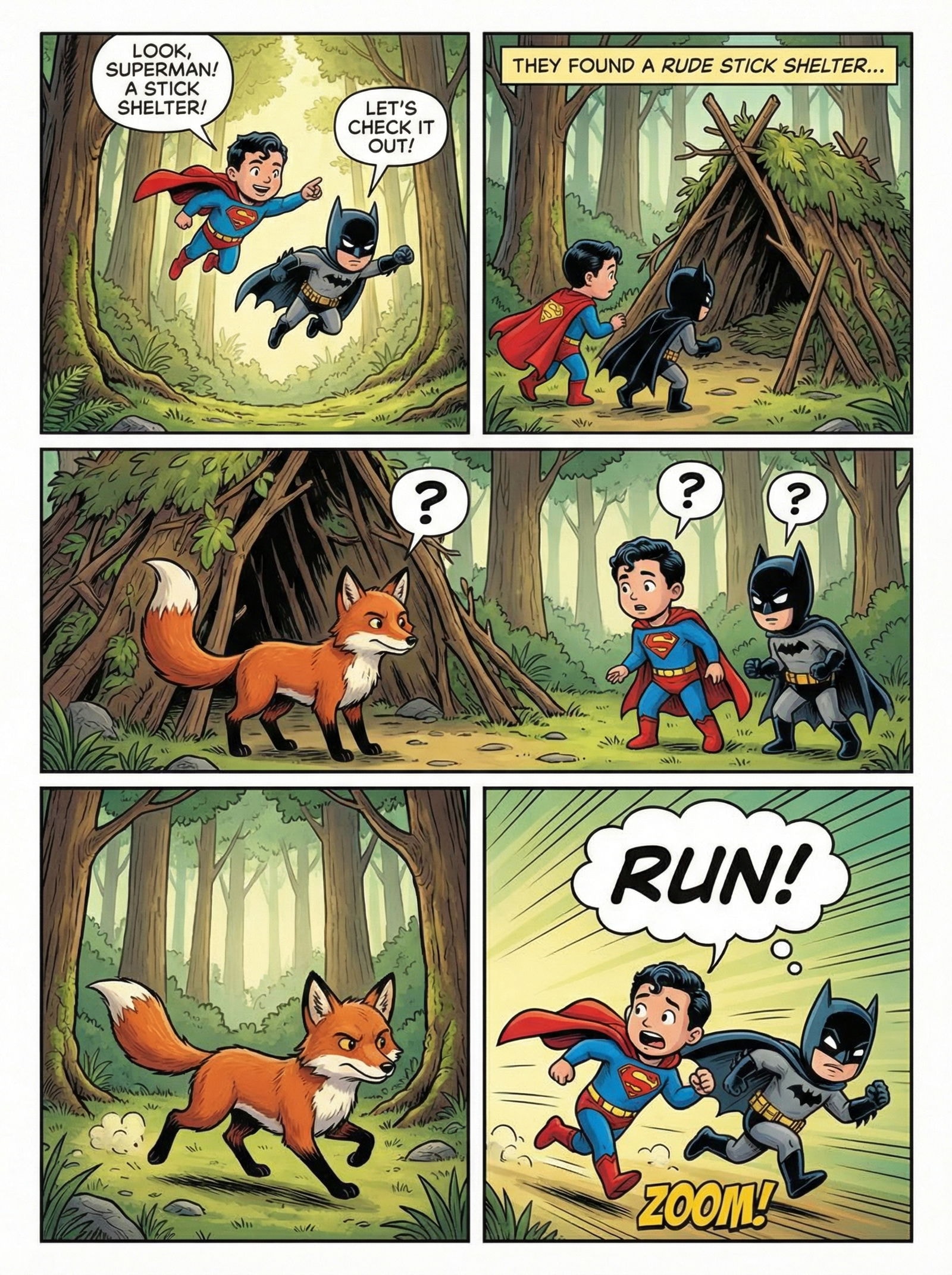
Your story as a blockbuster comic page.
1story: a child superman and a child batman joins their forces together in a forest. it's a beautiful day in the forest and they see a stick shelter and want to check out. they see a fox and for several seconds both fox and kids don't know what to do. they think first. then they all decide to run in opposite directions23instructions: {...+185 more lines
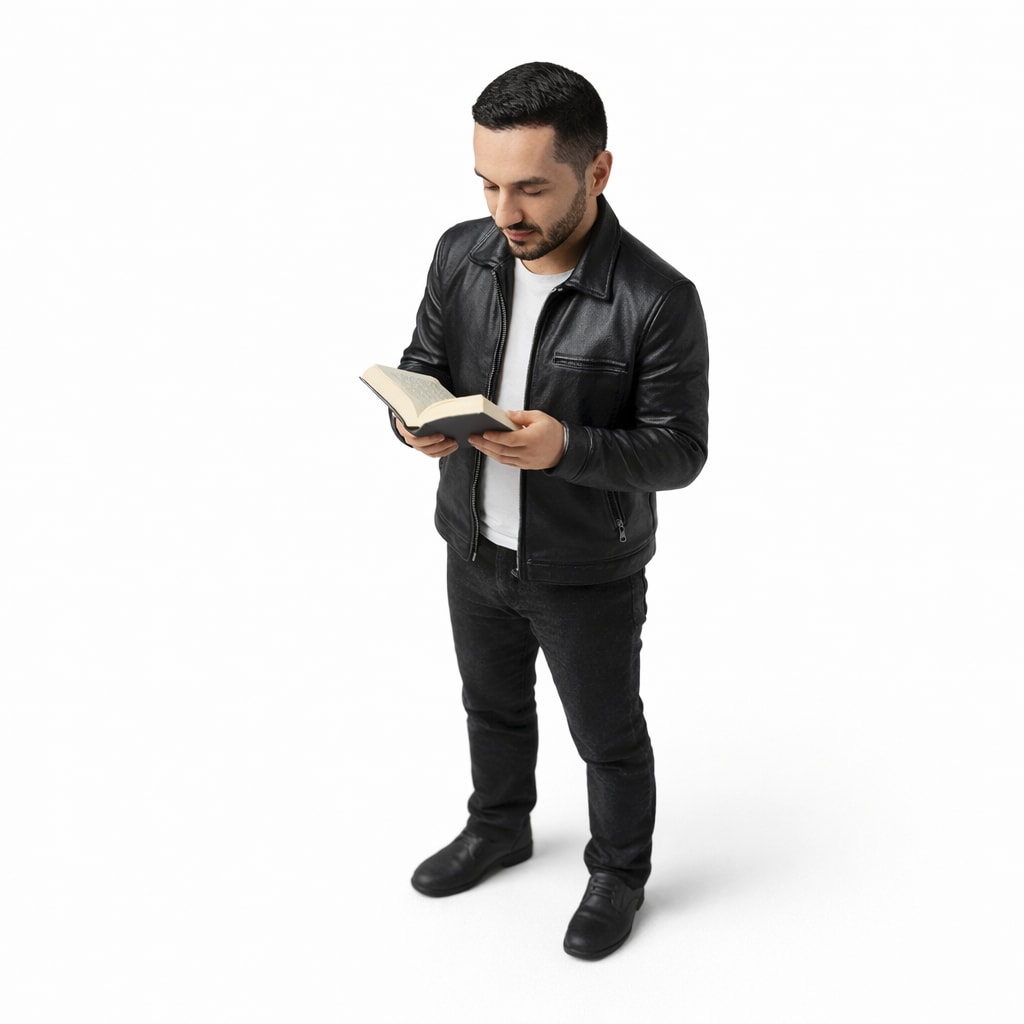
Create an isometric miniature 3D model of your own picture.
Make a miniature, full-body, isometric, realistic figurine of this person, wearing ABC, doing XYZ, on a white background, minimal, 4K resolution.
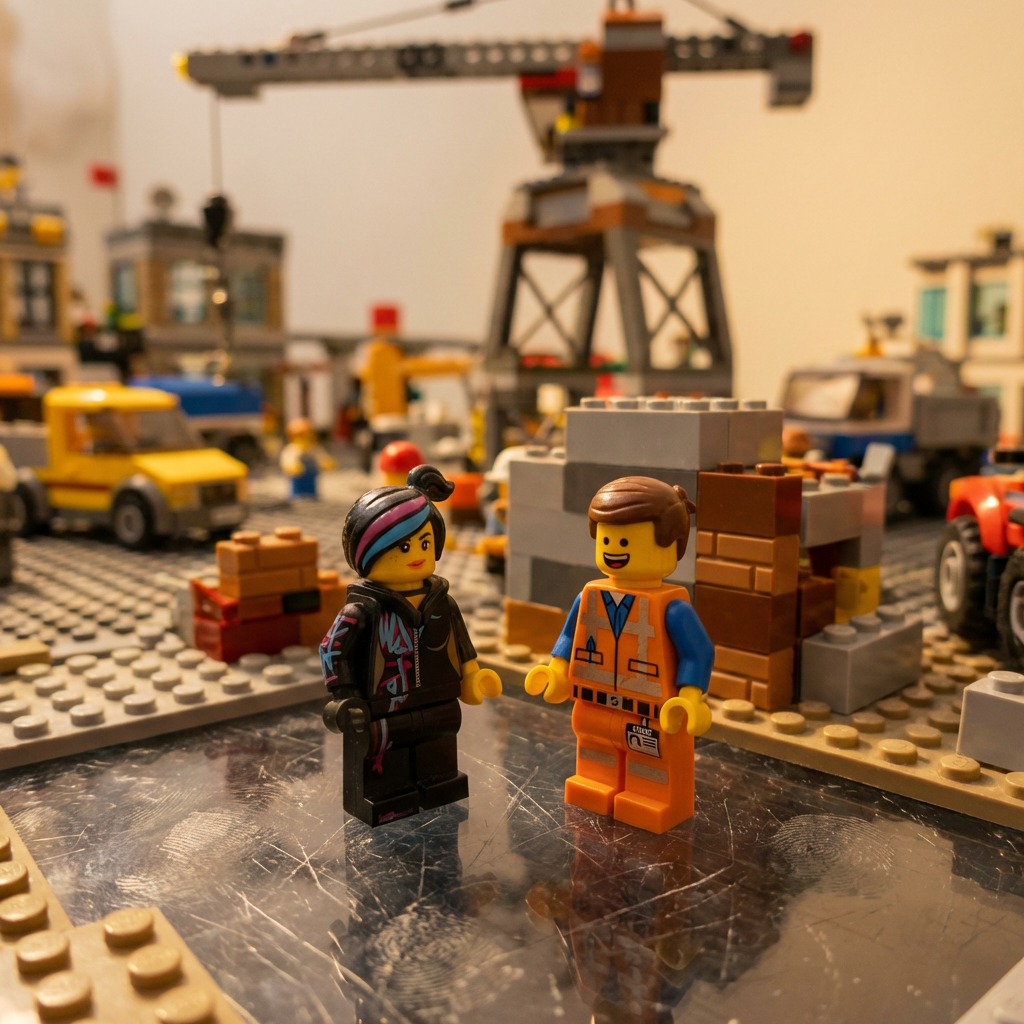
Reimagine as a scene from The LEGO Movie.
1{2 "TASK": "Reimagine as a scene from The LEGO Movie.",3 "VISUAL_ID": "Macro photography of plastic bricks. Stop-motion feel.",...+5 more lines

Reimagine the scene as a 'Rick and Morty' TV show screenshot
1{2 "TASK": "Reimagine the scene as a 'Rick and Morty' TV show screenshot.",3 "VISUAL_ID": "2D Vector Animation, Adult Swim Style (Justin Roiland). Flat colors, uniform thin black outlines.",...+6 more lines
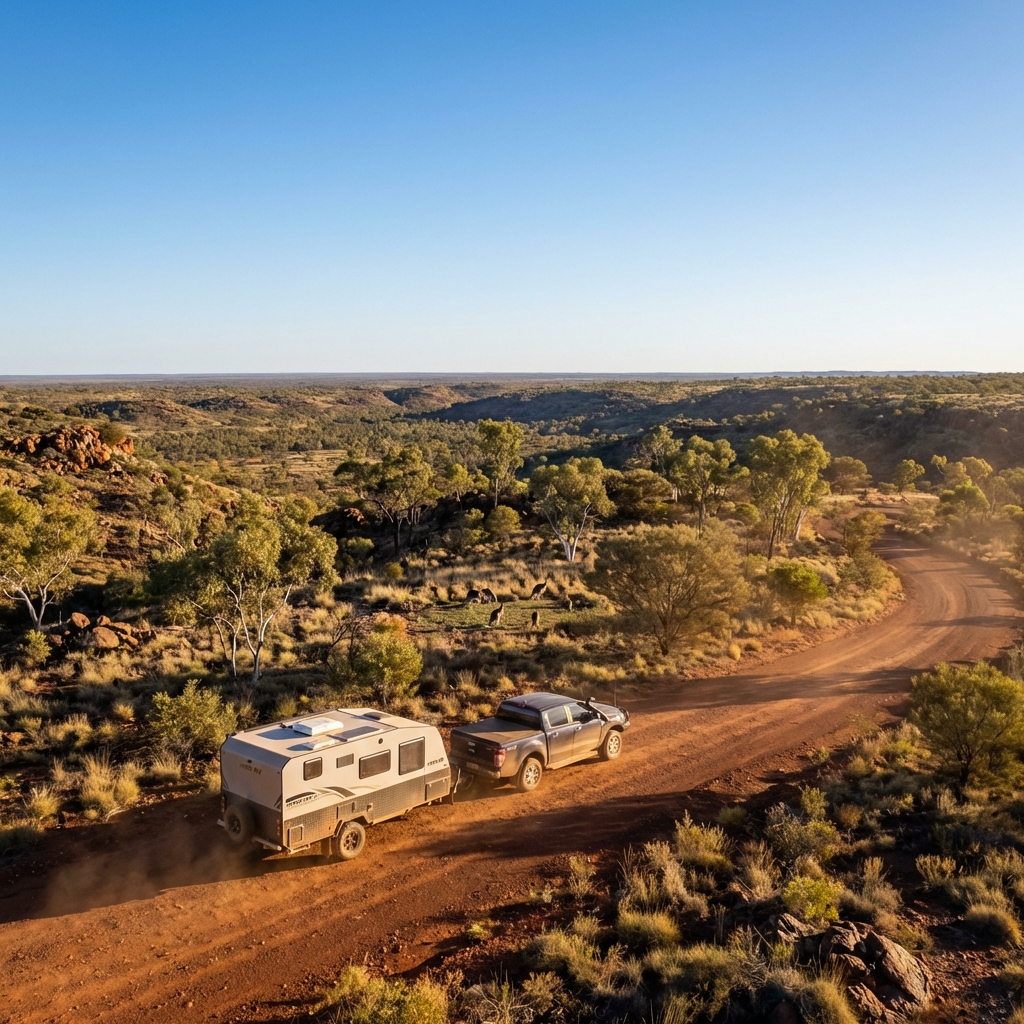
best for car
Create a cinematic, ultra-realistic adventure image for caravan that captures what Australians love most — vast landscapes, wildlife, and freedom.

Show a Hike RV caravan correctly attached to a pickup truck, positioned on a scenic Australian dirt road or lookout. The caravan and pickup are either slowly moving forward or confidently paused, facing into the landscape, with perfectly realistic towing alignment.

Environment & vibe:

Wide open Australian landscape (outback plains, bushland, or elevated lookout)

A small group of kangaroos in the mid-ground or background, naturally placed and not posing

Native vegetation like gum trees, dry grass, and rugged terrain

Strong sense of scale and openness Australians love

Sky & lighting:

Clear blue sky

Golden-hour sunlight (early morning or late afternoon)

Warm light hitting the caravan and pickup, long natural shadows

Subtle dust in the air for depth (not overpowering)

Camera & cinematic feel:

Low to mid-wide angle

Foreground depth with road or grass

Deep background stretching to the horizon

Film-like contrast and colour balance (natural, not stylised)

Style & realism:

Photorealistic cinematic travel photography

True-to-life textures and reflections

Natural colour grading (earth tones, blues, warm highlights)

No exaggeration or fantasy elements

Output rules:

No text

No people

No logos or overlays

Aspect ratio

Mood:

Epic

Free

Adventurous

Proudly Australian

Inspires exploration
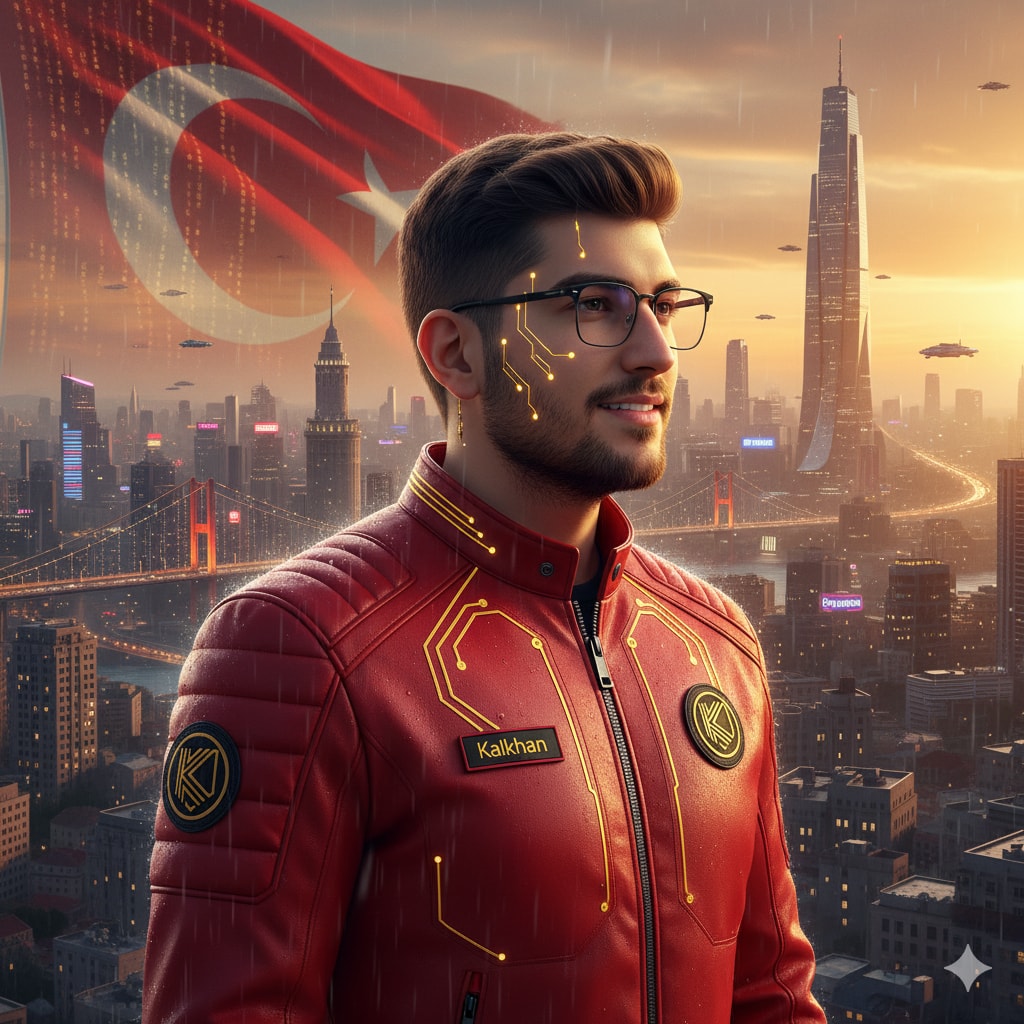
This is a structured image generation workflow for creating cyber security characters. The workflow includes steps such as facial identity mapping, tactical equipment outfitting, cybernetic enhancements, and environmental integration to produce high-quality, cinematic renders. After uploading your face and filling in the values in the fields, your prompt is ready. NOTE: The sample image belongs to me and my brand; unauthorized use of the sample image is prohibited.
1{2 "name": "Cyber Security Character",3 "steps": [...+22 more lines
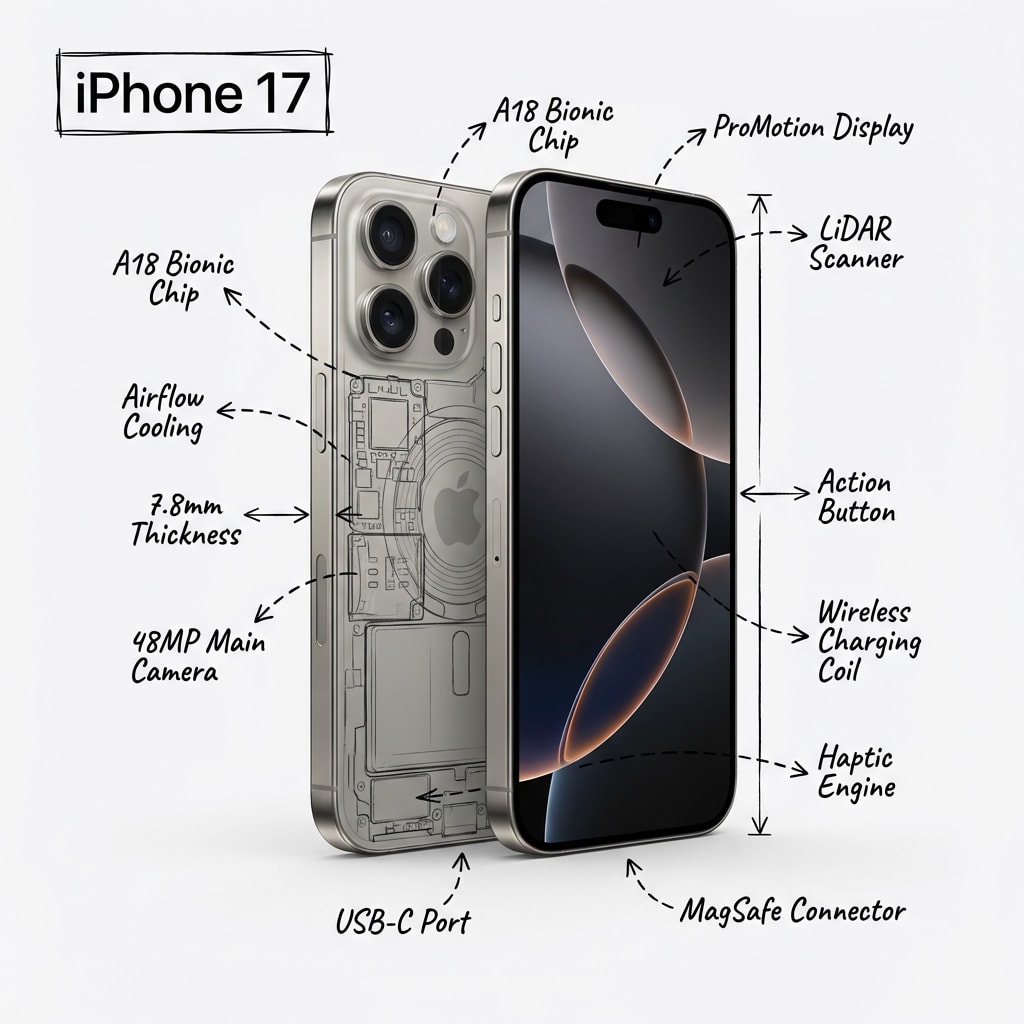
Ultra-photorealistic studio render of a object_name, front three-quarter view, placed on a pure white seamless studio background.The car must look like a high-end automotive catalog photograph: physically accurate lighting, realistic global illumination, soft studio shadows under the tires, correct reflections on paint, glass, and chrome, sharp focus, natural perspective, true-to-life proportions, no stylization.

Over the realistic car image, overlay hand-drawn technical annotation graphics in black ink only, as if sketched with a technical pen or architectural marker directly on top of the photograph.

Include:• Key component labels (engine, AWD system, turbocharger, brakes, suspension)• Internal cutaway and exploded-view outline sketches (semi-transparent, schematic style)• Measurement lines, dimensions, scale indicators• Material callouts and part quantities• Arrows showing airflow, power transmission, torque distribution, mechanical force• Simple sectional or schematic diagrams where relevant

The annotations must feel hand-sketched, technical, and architectural, slightly imperfect linework, educational engineering-manual aesthetic.

The realistic car remains clearly visible beneath the annotations at all times.Clean, balanced composition with generous negative space.

Place the title “object_name” inside a hand-drawn technical annotation box in one corner of the image.

Visual style: museum exhibit / engineering infographicColor palette: white background, black annotation lines and text only (no other colors)Output: ultra-crisp, high detail, social-media optimized square compositionAspect ratio: 1:1 (1080×1080)No watermark, no logo, no UI, no decorative illustration style
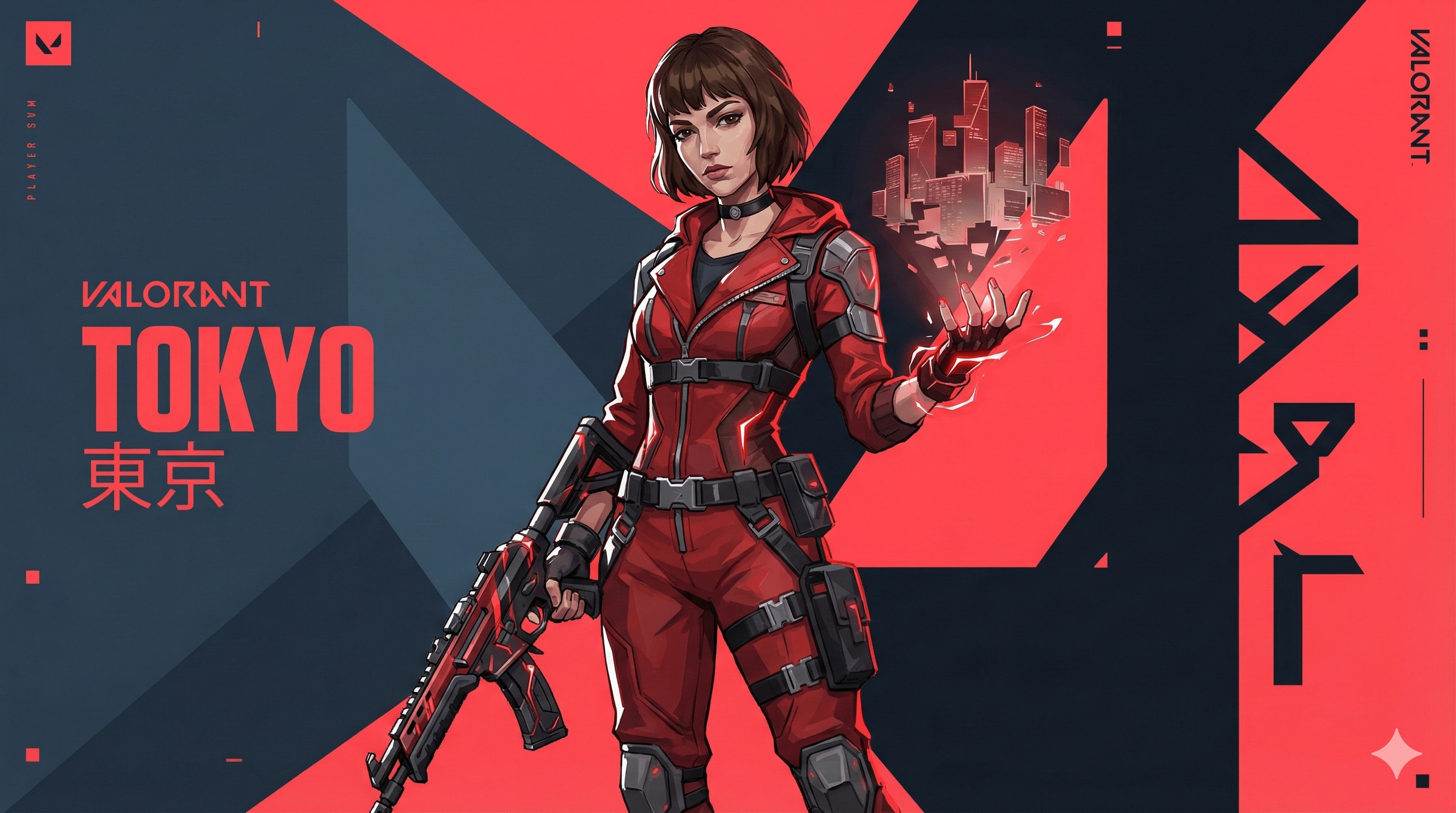
Valorant agent art style prompt.
{ "TASK": "Design a unique 'Valorant' Agent Key Art. Riot Games Art Style.",
"VISUAL_ID": "Sharp 2.5D digital painting. Fusion of anime & western comic. Matte textures, clean lines, no noise.",
"PALETTE": "Primary: Dark Slate Blue (#0f1923). Branding: Hyper-Red (#ff4655). Ability: Neon highlight.",
"AGENT": "Athletic, confident. Future-tech streetwear (straps, windbreaker, tactical gloves). Sharp facial planes. Hair: Thick, sculpted chunks (no strands).","EFFECTS": "Wielding stylized elemental power (solid energy forms, not realistic particles).", "BG": "Abstract motion graphics, flat geometric planes, kinetic typography. Red/Dark contrast slicing the frame.",
"LIGHT": "Strong rim lighting, hard-edge cast shadows.", "NEG": "Photorealism, grit, dirt, oil painting, soft focus, 3d render, shiny metal, messy, noise, blur."
}//You can add Name and Skills or size like 16:9 here.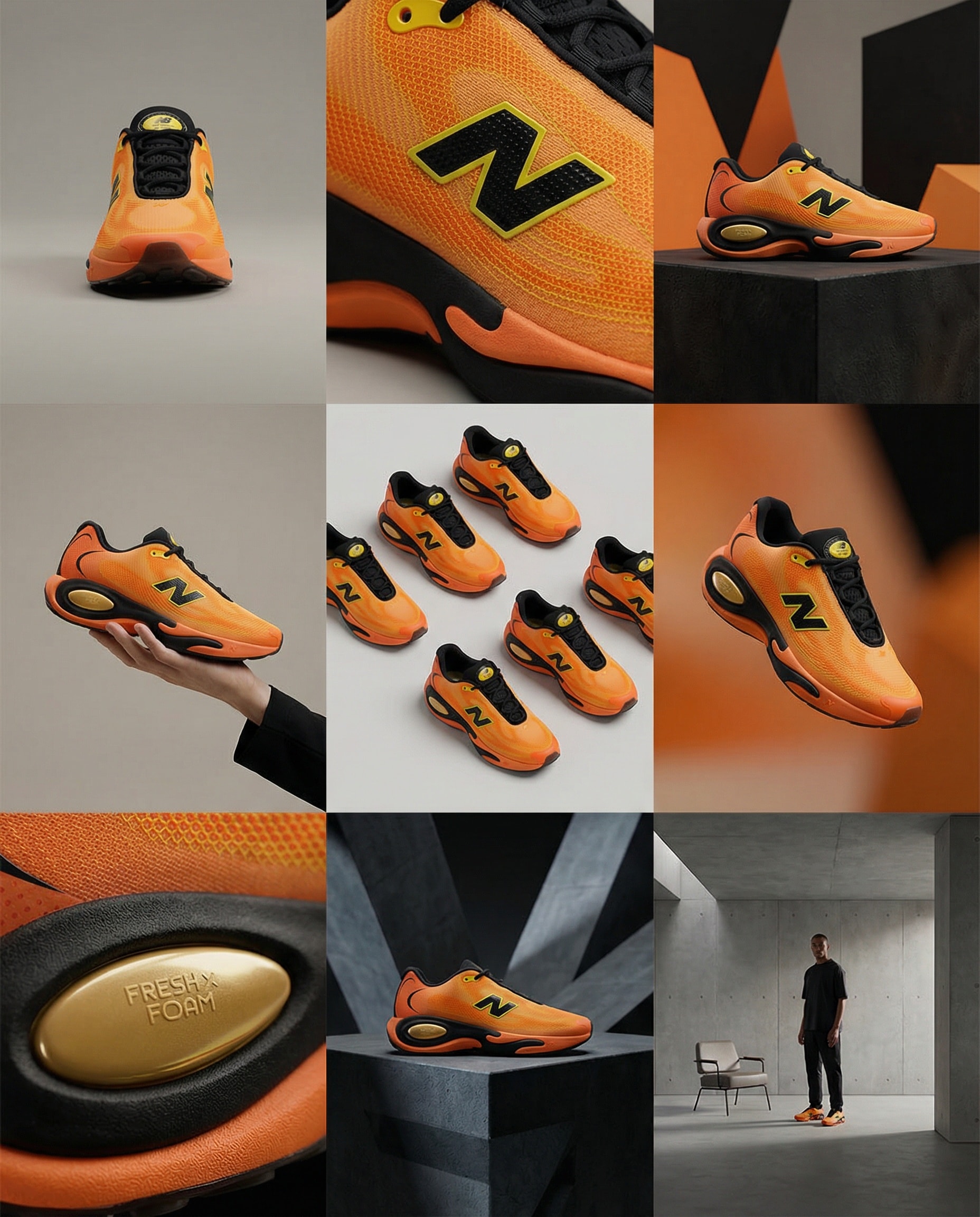
Create storyboard grids.
A clean 3×3 [ratio] storyboard grid with nine equal [ratio] sized panels on [4:5] ratio.

Use the reference image as the base product reference. Keep the same product, packaging design, branding, materials, colors, proportions and overall identity across all nine panels exactly as the reference. The product must remain clearly recognizable in every frame. The label, logo and proportions must stay exactly the same.

This storyboard is a high-end designer mockup presentation for a branding portfolio. The focus is on form, composition, materiality and visual rhythm rather than realism or lifestyle narrative. The overall look should feel curated, editorial and design-driven.

FRAME 1:
Front-facing hero shot of the product in a clean studio setup. Neutral background, balanced composition, calm and confident presentation of the product.

FRAME 2:
Close-up shot with the focus centered on the middle of the product. Focusing on surface texture, materials and print details.

FRAME 3:
Shows the reference product placed in an environment that naturally fits the brand and product category. Studio setting inspired by the product design elements and colours.

FRAME 4:
Product shown in use or interaction on a neutral studio background. Hands and interaction elements are minimal and restrained, the look matches the style of the package.

FRAME 5:
Isometric composition showing multiple products arranged in a precise geometric order from the top isometric angle. All products are placed at the same isometric top angle, evenly spaced, clean, structured and graphic.

FRAME 6:
Product levitating slightly tilted on a neutral background that matches the reference image color palette. Floating position is angled and intentional, the product is floating naturally in space.

FRAME 7:
is an extreme close-up focusing on a specific detail of the label, edge, texture or material behavior.

FRAME 8:
The product in an unexpected yet aesthetically strong setting that feels bold, editorial and visually striking.
Unexpected but highly stylized setting. Studio-based, and designer-driven. Bold composition that elevates the brand.

FRAME 9:
Wide composition showing the product in use, placed within a refined designer setup. Clean props, controlled styling, cohesive with the rest of the series.

CAMERA & STYLE:
Ultra high-quality studio imagery with a real camera look. Different camera angles and framings across frames. Controlled depth of field, precise lighting, accurate materials and reflections. Lighting logic, color palette, mood and visual language must remain consistent across all nine panels as one cohesive series.

OUTPUT:
A clean 3×3 grid with no borders, no text, no captions and no watermarks.
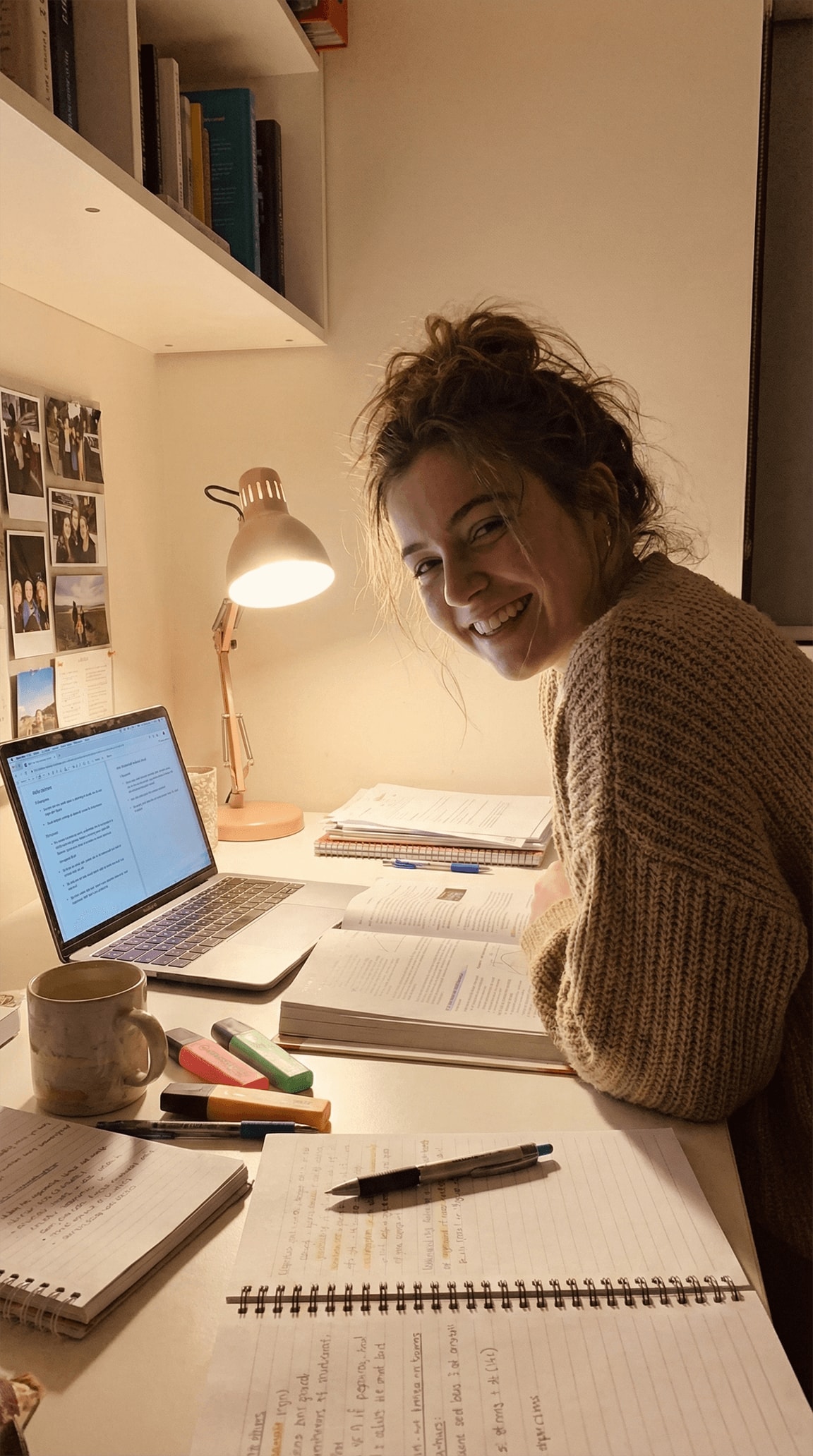
A candid study moment captured from a desk-level perspective inside a student’s home. The camera is placed on the corner of a slightly messy study desk, creating an intimate, first-person angle that feels natural and unposed.
1{2 "subject": {3 "description": "A cheerful university student studying at home, captured during a casual study session. Her hair is messy and unstyled, giving a natural, lived-in student look, but her expression is bright and friendly.",...+27 more lines